

Scope of Data Science in Nepal: Career Opportunities, Salary, Skills & Future Growth (2026 Guide)
Written by UpSkills Nepal Editorial Team
Information is the basis of innovation, decision-making, as well as growth in the current world, which is data-obsessed. Businesses worldwide are dependent on data science to provide decision support in their business strategies, automation, and to enhance their performance. Nepal is currently entering into this transformational sphere. The scope of data science in Nepal is rapidly growing in hands, and it opens new opportunities in career and technology in the country.
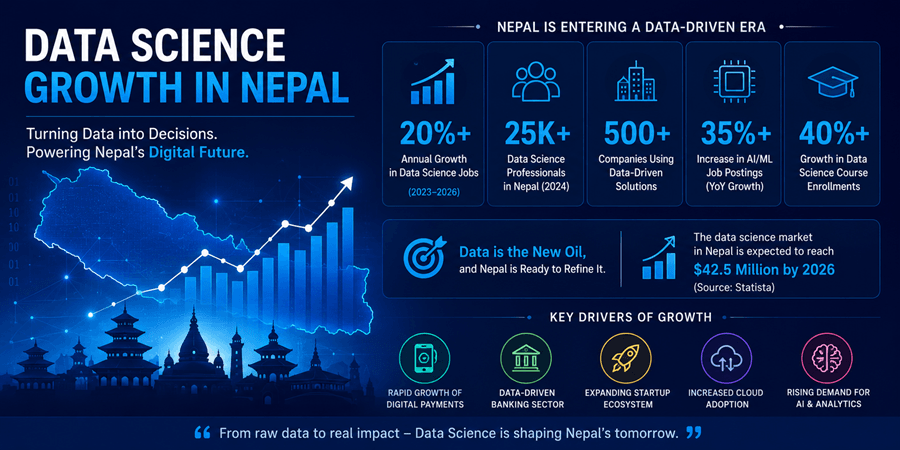
Data science is slowly turning out to be one of the most important factors influencing the digital economy of Nepal. It includes your behavior, habits, money flow, and decision-making signals. Every time someone uses a digital wallet, watches YouTube, shops online, or even scrolls social media, data is created. Most people don’t see it. But businesses do. And this is exactly why the scope of data science is growing faster than ever before. Not in theory, but in real jobs, real companies, and real demand across Kathmandu and beyond.
What Data Science Actually Means
Data science is not just programming. It is not just math either. It is the process of using data to answer real-world business questions.
For example:
- Why are users stopping a mobile app?
- Which customers are likely to take loans?
- What products sell most in Kathmandu?
- Which area gives the highest business profit?
A data scientist uses Python programming, statistics, machine learning, and business understanding to answer these questions. Data science helps companies make decisions using facts instead of guesses. In Nepal, this shift is just beginning- but it is happening fast.
Why Data Science Is Growing in Nepal
Nepal is not yet a fully data-driven economy, but digital transformation is already reshaping industries. Let’s look at the real reasons behind this growth.
1. Rapid Growth of Digital Payments in Nepal
Digital payment systems have changed daily life in Nepal. Platforms like eSewa, Khalti, and fonepay, and mobile banking services are now used across cities and even in rural areas. From tea shops in Kathmandu to supermarkets in Pokhara, digital transactions are becoming normal.
This creates huge datasets, such as:
- transaction history
- customer spending behavior
- peak usage time
- location-based patterns
Businesses are now dependent on this data to understand customers and improve services.
2. The banking sector is becoming data-driven.
Banks in Nepal are no longer operating only on manual decisions. Institutions like NIC Asia Bank, Nabil Bank, and Global IME Bank are investing heavily in digital transformation, automation, and analytics systems.
They now want answers such as the following:
- Who is likely to default on loans?
- Where is fraudulent activity happening?
- Which customers generate long-term profit?
- How can customer retention be improved?
This shift has created strong demand for data professionals in Nepal’s financial sector.
3. Growth of the Startup Ecosystem in Nepal
There is an increasing trend of startups in Nepal, especially in the Kathmandu Valley. The startups of cities like Baneshwor, Pulchowk, and Lalitpur have grown their businesses through:
- food delivery
- e-commerce
- education technology
- logistics and ride-sharing
Startups generate continuous user and business data. That is why analytics and data skills are becoming essential for survival. This directly increases the data science scope in Nepal in real job markets.
Where Data Science Is Used in Nepal
Data science is no longer limited to IT companies in Nepal. It is now used across almost every major industry to improve decisions, customer experience, and business performance.
- Banking & Finance
Used for fraud detection, credit scoring, loan prediction, and customer segmentation.
Banks like NIC Asia Bank, Nabil Bank, and Global IME Bank use it to reduce risk and make better financial decisions.
- Telecom (NTC, Ncell)
Used for customer behavior tracking, churn prediction, and network optimization.
It helps improve service quality and retain customers.
- Healthcare
Used for patient data analysis, disease tracking, and hospital resource planning.
It supports better treatment decisions and system efficiency.
- E-Commerce
Used for product recommendations, sales forecasting, and customer behavior analysis.
It helps online platforms understand buying patterns and improve sales.
- Education
Used for tracking student performance, attendance analysis, and improving learning outcomes. It helps institutions improve teaching quality and student success.
Data Science Career Opportunities in Nepal
Data science is not just one profession. It is a combination of several roles, such as:
1. Data Analyst
Works on data cleansing and analysis to help businesses make decisions.
For example, why did our sales fall this month?
2. Data Scientist
Uses modeling to predict future trends.
For example, who are the next buyers?
3. Machine Learning Engineer
Develops automated learning systems using data.
For example, recommendation engines like YouTube and Netflix.
4. Data Engineer
Designs and maintains systems that manage huge volumes of data.
5. AI Engineer
Designs intelligent systems like bots, automation, and AI.
Firms in Nepal do not necessarily require advanced professionals. They just need individuals capable of solving their business problems using data. And that’s the reason why there is a demand for data science experts.
Data Science Roadmap for Beginners in Nepal
Start simple. You don’t need everything at once- just a clear step-by-step path.
Step 1: Learn Python fundamentals.
Concentrate on variables, loops, functions, and data handling.
Step 2: Learn data basics.
Concentrate on CSV/Excel files, datasets, and data storage.
Step 3: Learn SQL.
Practice data selection, filtering, and data joining techniques.
Step 4: Engage in project work.
Try some simple projects in Nepal, such as payment data, e-commerce, or customer behavior.
Step 5: Learn data visualization.
Learn how to represent data using Power BI/Tableau, etc.
Step 6: Create a portfolio.
Showcase your work and projects, dashboard, GitHub contributions, and case studies.
Salary of Data Science Professionals in Nepal
It depends on factors like experience, proficiency, industry, and project exposure.
| Position | Monthly Salary (NPR) |
| Intern | 10,000 – 20,000 |
| Junior Data Analyst | 25,000 – 50,000 |
| Data Analyst | 50,000 – 90,000 |
| Data Scientist | 80,000 – 150,000+ |
| Machine Learning Engineer | 100,000 – 200,000+ |
| AI Specialist | 120,000 – 250,000+ |
Highly skilled professionals who have good portfolios, project experience, and unique knowledge may earn more money. Salary ranges are indicative and may vary depending on company size, technical expertise, portfolio strength, certifications, and project experience.
Understanding the Scope of Data Science in Nepal
International outsourcing is no longer the only scope of data science in Nepal. Local banks, the hospital industry, telecom companies, and even retail businesses are today entering the world of data science in their businesses. Data is being utilized by these organizations in predictive analytics, insights on customer behavior, process automation, and fraud detection.
Data generation in Nepal has gone through the roof due to the impact of digital services and mobile applications, and online transactions. The wave has also enhanced the data science scope in Nepal to become an asset for most businesses in terms of growth and efficiency.
Data Science Growth in Various Industries
The scope of data science in Nepal today is more than ever. As more companies realized the need of Data, the more is their engagement.
In the area of banking and finance, institutions utilize data to understand credit risk, fraud, and profiles of customers. Health professionals use predictive models in monitoring disease progression and management of resources in hospitals. The telecoms industry uses customer utilisation data to optimise the networks and lower churn. Data is used in e-commerce to provide data-driven product recommendations as well as in logistics and demand.
As weather data and satellite maps take the farmers to a superior level in farming, even traditional agriculture can be enhanced nowadays by the use of data science, and pilot projects are already being used in agricultural fields.
Rising Career Roles in Data Science
With growing adoption, the demand for skilled professionals is increasing. Popular data science job in Nepal include:
1. Data Analyst
2. Data Scientist
3. Machine Learning Engineer
4. Business Intelligence Analyst
5. Data Engineer
These positions are important in assisting organizations to transform raw data into valuable information. It can be observed that these roles also show how the data science scope in Nepal is fostering the youth and mid-career career-oriented job opportunities in Nepal.
Nepal’s Growing Potential in Data Science
Nepal is in a very unique place to future data science hub due to a number of reasons.
Firstly, there is a significant supply of young and educated, and technology-wise population. The talent pool is promising, as there are thousands of graduates in IT and computer science annually. This aids the extent of sustainability and the data science scope in Nepal.
Secondly, real-time analytics, AI models, and data visualization are some of the components of the market that the startup ecosystem currently requires in the country. Due to competition among startups in the digital market, data science job in Nepal are unfolding in various sectors.
Lastly, the popularity of working remotely enables the Nepali data professionals to work with global companies in the comforts of their homes and increases the coverage and demand of data science job in Nepal in other countries.
Challenges to Deal
Despite the momentum, Nepal faces challenges in fully realizing the scope of data science:
1. Limited access to open datasets and computing infrastructure
2. Gaps in data privacy regulations
3. Lack of practical, large-scale projects for training
4. Lack of experienced persons in the field to act as mentors.
Nevertheless, these barriers can be removed as people become aware and businesses are willing to invest in digitalization.
Data Professional Global Opportunities in Nepal
Companies don’t care where you live. They care whether you can solve problems using data. If you’ve the right skill set, you could serve organizations located in the US, Europe, Australia, and even India from the comfort of Kathmandu or any other place in Nepal.
Currently, Nepali professionals are remote-working with:
- international startups
- AI-driven companies
- consulting firms
- research organizations
- product-based tech companies
Platforms like Upwork, LinkedIn, Freelancer, and Toptal have made global work opportunities much more accessible than before. Many professionals are now earning a lot; people today earn in USD while residing in Nepal- something that was unheard of some ten years ago.
The Impact of Artificial Intelligence on Data Science in Nepal
AI is not a replacement for data science but its enhancement. Previously, the scope of data science only extended to analyzing historical events. Currently, however, its scope extends far beyond that into the domain of forecasting future possibilities, automation, and development of intelligent systems.
Data science in today’s world encompasses the following:
- Machine Learning
- Deep Learning
- Natural Language Processing (NLP)
- Computer Vision
- Generative AI
- Large Language Models (LLMs)
Even small applications, such as recommendations made by YouTube or feeds on TikTok, are the result of the application of such systems. The use of AI in banks, fintechs, and startups in Nepal is gradually being adopted.
Nepal’s Digital Economy is Growing Rapidly
Nepal is slowly shifting toward a digital-first economy. As per Nepal Rastra Bank, digital transaction volume in Nepal has hit NPR 98 trillion during the financial year 2024/25, indicating tremendous growth in mobile banking, QR payments, and digital wallets.
Some clear signs include:
- millions of daily internet users
- rapid growth of mobile banking
- increasing digital wallet usage
- expanding e-commerce platforms
- automation in business operations
This immense rise in the digital landscape is also leading to the creation of large volumes of consumer and business data. This is why demand for data professionals is rising across Nepal’s private and public sectors. It directly strengthens the future of data science in Nepal, especially in banking, fintech, healthcare, and retail industries.
Train With Experts From the Industry
At UpSkills Nepal, trainees benefit from practical mentoring by experts in the fields of artificial intelligence, machine learning, data science, and analytics who have experience practicing their professions in the same domains.
Er. Thomas Bashyal
- AI Research Director
- Machine Learning Engineer
- Assistant Professor
- Certified Data Scientist
- Researcher in the field of AI and Machine Learning
Real Problem in Data Science Learning in Nepal
Let’s be honest. Most beginners in Nepal start learning data science with excitement, but they stop halfway. Why?
Because they:
- Watch tutorials without practice
- collect certificates but never build projects
- avoid real datasets
- don’t understand business problems
But companies don’t hire people to watch videos. They hire people who can solve real problems.
Here’s the reality: Knowing Python is not enough. Knowing how to use Python on real problems is what matters. This gap between learning and doing is where most learners fail silently. And this is also where real opportunities begin.
Why Practical Learning Matters More Than Theory
Data science cannot be mastered through theory alone. You need real-world practice.
For example:
- analyzing Nepal’s digital payment patterns
- studying e-commerce sales trends in Kathmandu
- Understanding customer behavior in banking apps
When learners work on real datasets, they start thinking like data professionals- not students. In real use, this usually fails because learners focus too much on concepts and too little on application. That is why portfolio-based learning is becoming more important than certificates.
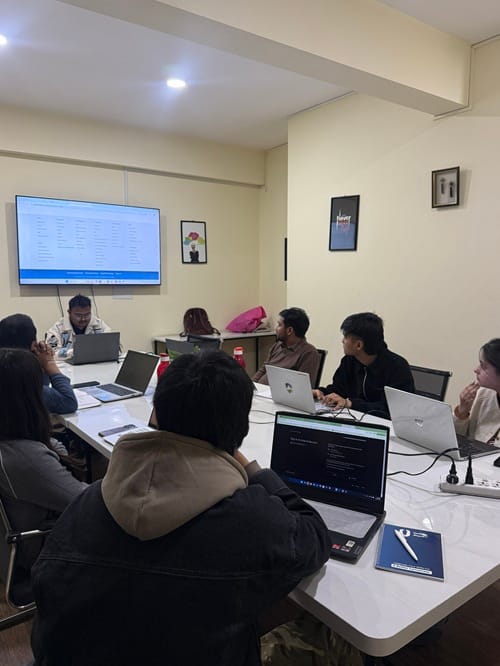
Real Learning Paves the Way for Real Opportunities
Saurya Tuladhar
Before joining data science, Saurya was seeking ways to enhance his analytic and technical competencies through future career prospects. Having gone through his training and worked on real-life assignments like data analysis and business analytics, he managed to bag the summer internship position at Himalayan Capital.
Based on Saurya’s account, his experience with the curriculum, project work, and real datasets gave him an idea of how data drives decision-making in the real world.
Future of Data Science in Nepal
The future is already unfolding. In the coming years, Nepal will see strong growth in:
- AI-powered business systems
- Predictive analytics in banking
- automation in industries
- data-driven marketing
- business intelligence dashboards
Companies will no longer compete only on products. They will compete on how well they use data. That is why the future of data science in Nepal is becoming a major factor in career planning for students and professionals. Those who learn early will have a strong advantage in the job market.
Key Takeaways
- Data science is growing across almost every industry in Nepal
- AI is becoming an essential part of modern data science
- Practical skills matter more than certificates
- Remote work has opened global job opportunities
- Nepal’s digital economy is expanding rapidly
- Demand for data professionals will continue to rise
Conclusion
Nepal is still in the early stage of its digital transformation. That is actually a good thing. Because early-stage markets reward people who start early. If you learn data science today, you are not just learning a skill- you are preparing for a future where every decision in business will depend on data. And that is the real opportunity. So the question is not whether data science will grow in Nepal. The real question is, will you grow with it?
The future of data science in Nepal seems bright and effective, and has lots of opportunities as it further digitalizes. Upskills Nepal and other training institutes in Nepal are there to help you develop a fine career in data science. Explore UpSkills Nepal’s Data Science Course if you want to learn Data Science in detail and in depth.
FAQs on Scope of Data Science in Nepal: Career Opportunities
What is the scope of data science in Nepal?
The scope of data science is rising at an extremely rapid pace because of virtual transformation, high reliance on the internet, development of e-commerce, artificial intelligence, and the increased need to make decisions based mostly on facts.
Is data science a good career choice in Nepal?
Yes, data science is definitely a career worth pursuing in Nepal since there is high demand for this profession in banks, telecommunications, startups, and e-commerce companies, with higher salaries.
Should I have any IT background for learning data science?
Absolutely not. Many people without any IT background have joined the data science field through self-learning.
What skills are required to become a fact scientist in Nepal?
The basic requirements are Python, SQL, statistical skills, visualization skills, and knowledge to understand machine learning.
Can data science help me get remote jobs?
Yes, data science skills are in global demand. Many professionals in Nepal work remotely for international companies through freelancing platforms and remote job portals.
Reviewed & Validated By:
Er Thomas Basyal – AI Research Director | Machine Learning Engineer | Data Science & AI Trainer at UpSkills Nepal


